Who each lesson is for
- Evals (Year 9): Fractions, percentages and averages. No coding or AI knowledge needed.
- Deepfakes (Years 7–12): Percentages. Years 7–8 can focus on the verification desk; Years 10–12 can go further with the detector maths.
 brightlab.Made for curious minds
AI can answer questions, write essays, make pictures and copy voices. Before you trust it, check it: is this AI any good, and is this picture, video or voice real? Watch short animations, make a prediction, then test the idea yourself in a hands-on lab.
Each one stands on its own and takes about an hour.
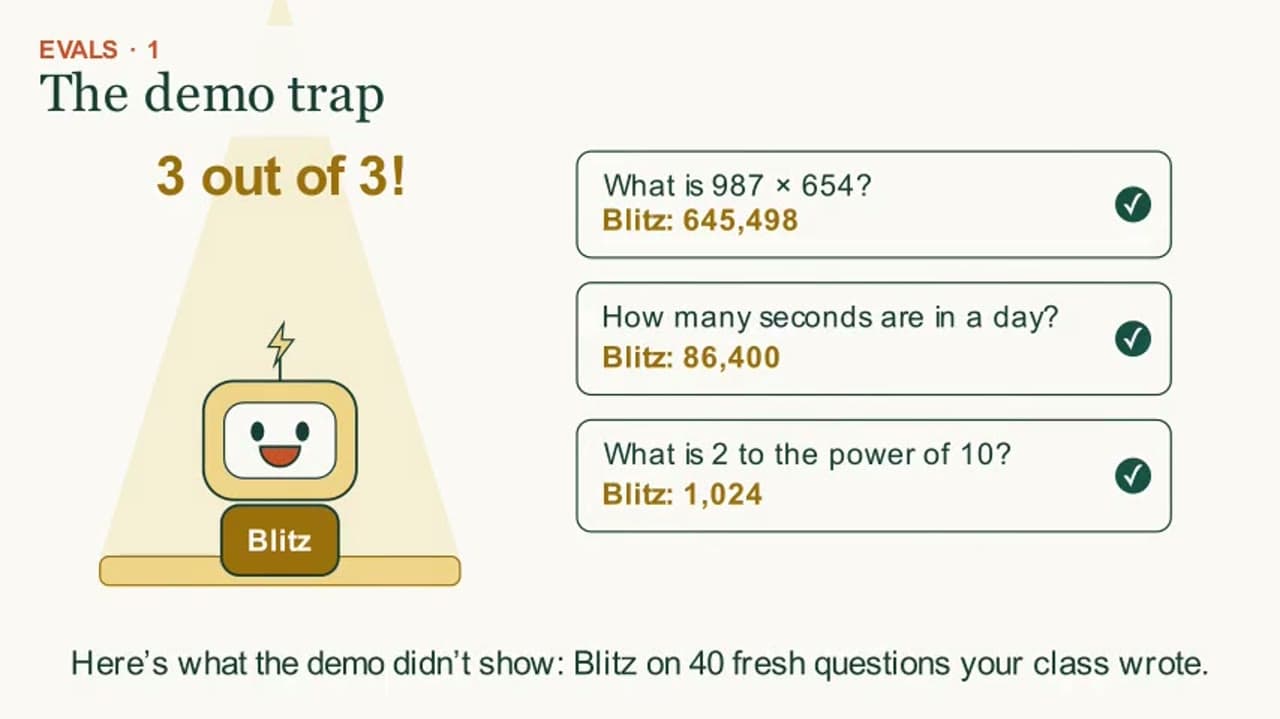
Two homework bots both say they’re brilliant. How would you find out which one really is?
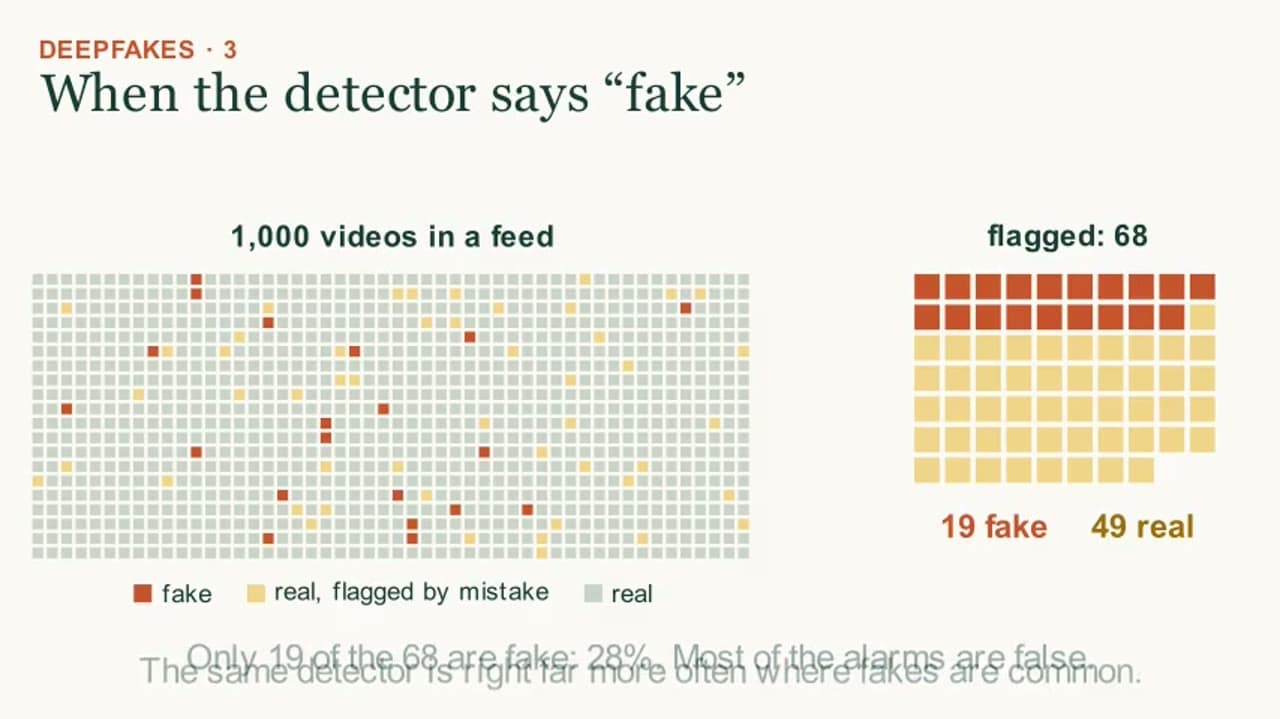
A video looks completely real. How can you tell whether to believe it?
The same rhythm as every Brightlab investigation.
Short silent animations show the idea in action.
Commit to what you think will happen, and why.
Try it in the lab and gather evidence.
Use the evidence. Hunt for a counterexample.
Each lesson page ends with a sequence, assessment evidence, common misconceptions and a glossary.
The animations were made with Manim. In the evals lesson, Blitz and Sage are pretend bots and Brightlab wrote all of their answers; the animations and the lab score the same question file, so the numbers match. In the deepfakes lesson every post, account and person is invented, and no real deepfake is shown.